










If you’re not mulching in your garden, it’s about time you started. Every gardener needs the aid of mulch to keep the gardening growing its best. When used correctly, mulches:
- help maintain soil moisture in warm climates
- regulate soil temperature levels
- keep down troublesome weed growth
- help prevent erosion
- add vital nutrients to the soil
However, there’s definitely a bit of an art to getting the mulch laid properly. Mulching done poorly can be more detrimental than not mulching at all. Here are three common mistakes to avoid in your garden, orchard or landscape.
1. Making a “Mulch Volcano”
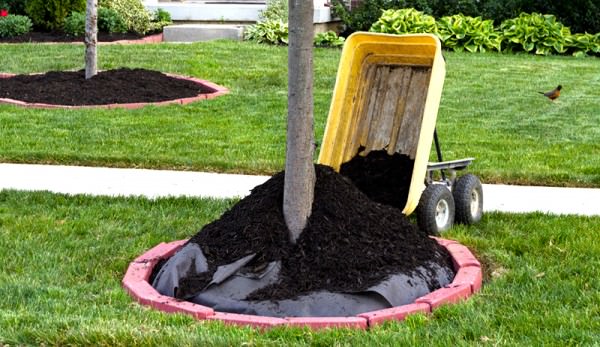
Working as a landscaper in my youth, I spent a lot of time hauling and placing mulch. When visiting the various homes of my clients, the most common mulching mistake I witnessed was the use of too much,too close to the stem or trunk of the plant—we called this the mulch volcano.
When mulching around a plant or tree, dense mulches should never be piled up directly on the trunk or stem because it will keep the trunk too wet, encourage shallow root systems and can actually kill your beloved plants. Instead of mounding thick mulch beds against the tree, spread it at an even thickness (a maximum 3 to 4 inches deep ) around the plant to the edge of the drip line, leaving a slightly thinner layer near the trunk or stem.
2. Using Uncomposted Organic Mulches
Organic mulches are some of the best mulches around, as they break down slowly and add helpful nutrients to the soil. One common mistake that many homeowners often make is the use of uncomposted organic materials, such as grass clipping or wood from a chipper. These substances all can make relatively effective mulches when properly treated, but “green” unprocessed materials right from the mower or chipper should not be used immediately.
The major issue with these “green” or raw mulches is that rather than adding nutrients to the soil, the initial decomposition process will often leech out essential nutrients, like nitrogen from the soil below. This primarily applies to homemade mulches—if you’re purchasing it from a reputable nursery, this typically isn’t an issue, as most commercially available mulches are composted before reaching consumers.

3. Sourcing Free Mulch
Avoid the tragic consequences of using free municipal mulch that comes from county or city-waste departments. These are often uncomposted, potentially full of pesticide-ridden materials and may contain destructive pests, such as termites. It’s important—especially if you’re an organic gardener who wants to know exactly what chemicals are coming in contact with your edible produce—to have a clear understanding about where your amendments come from.
As we make our way into the warm summer months, mulch can be a huge helper in your garden. Just make sure you’re laying it right.